
What to Expect at a Cremation
If you’ve never been to a crematorium before, it’s completely natural to feel unsure about what to expect. Many people tell me they worry about “getting it wrong” or not knowing the etiquette. So I thought I’d put together a down to earth guide to help you feel more at ease. Every crematorium is slightly different but the overall experience is usually calmer, simpler and more comforting than people imagine.
Arriving at the Crematorium
Most crematoria are set within peaceful grounds, with trees, gardens and birdsong. They are designed to feel respectful rather than intimidating. You’ll find a chapel (sometimes more than one), with a waiting room and toilets nearby. A display outside will list the services taking place that day, so you can be confident you’re in the right place at the right time.
You’re generally advised to arrive 15-20 minutes before the service start time. This gives you time to find the right chapel, settle yourself and say hello to other attendees (if you wish). It also provides time to speak to crematorium staff if you require support for a disability or have access needs. Crematorium staff are used to supporting people with disabilities and will quietly help with seating, hearing loops or anything else you may need, to make your visit comfortable.
The hearse (or other chosen transport) will arrive close to the service start time. A chapel assistant or funeral director will provide instruction to family pallbearers and guide everyone on whether to enter before the coffin or follow behind it. You won’t be left to guess, someone will always direct you gently. Orders of Service (outlining the content of the service) will usually be placed on seating, or handed out, by either the funeral director or the family.
Entering the Chapel
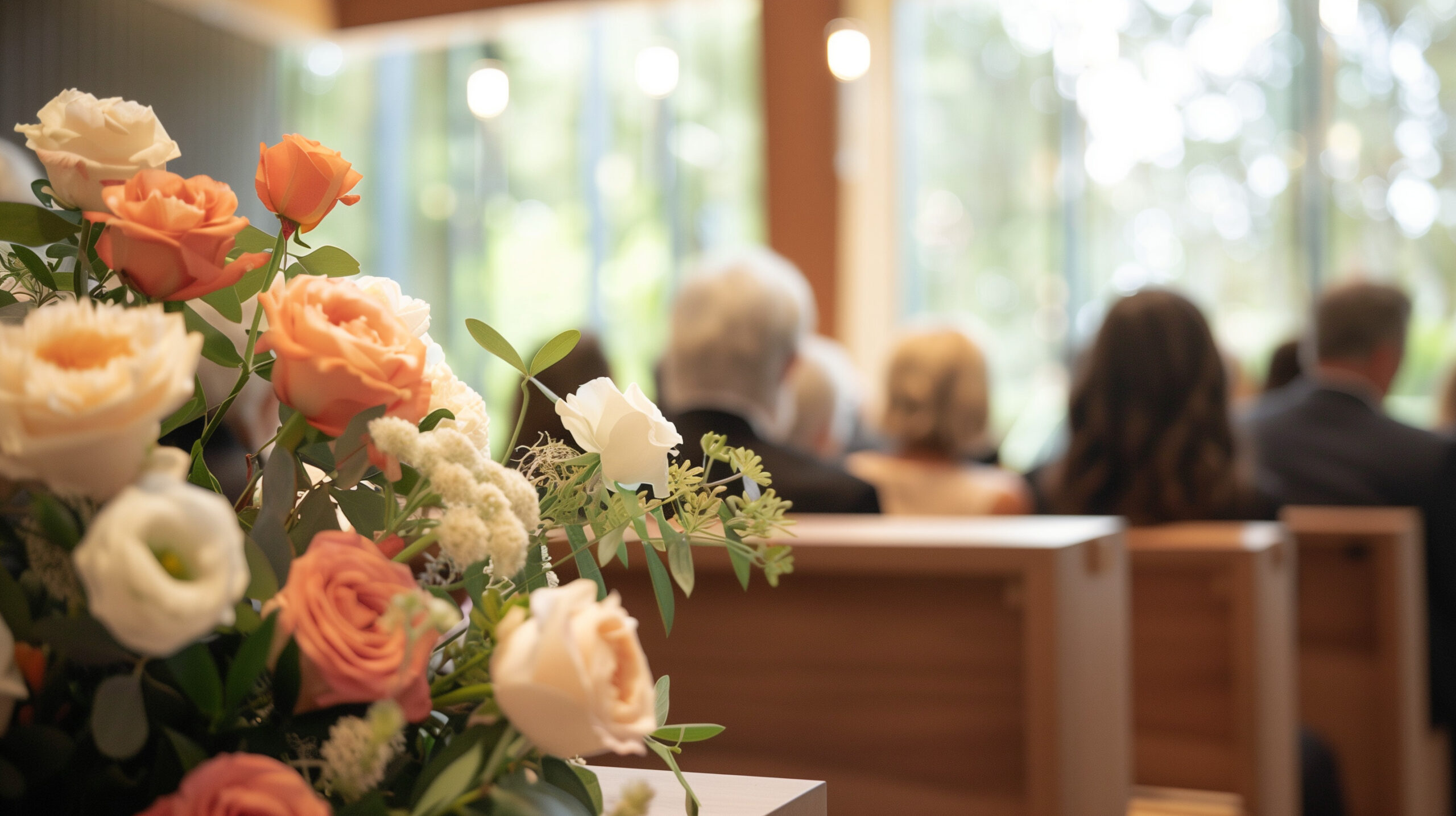
The space where the funeral service takes place is often called the chapel, even in non religious settings. Some crematoria use the term service hall instead. Seating is arranged in rows, with the front rows usually reserved for immediate family or those taking part in the service. If the chapel becomes full, standing at the back is perfectly acceptable. If you feel anxious and want to sit near an exit, that is absolutely fine, you can step out at any time.
Many chapels have screens that may display a photograph of the person who has died or show a visual tribute if one has been arranged. Services can often be livestreamed or recorded for those unable to attend in person. Music usually plays as people arrive. Most crematoria use national audiovisual providers, ensuring high quality sound and copyright licensing. Funeral directors book the music in advance and everything is ready to play on the day.
The Service
A crematorium service typically lasts 20–40 minutes, depending on the family’s wishes and the venue’s schedule. It will be lead by an officiant such as a Celebrant. It may include:
- A welcome from the celebrant
- Music, readings, poems or prayers
- Eulogy and tributes
- A moment of reflection
- The final farewell (committal)
- A final piece of music
As a celebrant, my role is to hold the space gently, guide everyone through the story of the person’s life, honour their personality and create a sense of calm and connection. People attending will naturally hold a range of beliefs and you won’t be asked to take part in anything that doesn’t align with your own values. You’re welcome simply to be present in whatever way feels right for you. You don’t need to participate in anything unless you want to. Some people join in with hymns or readings; others simply listen. Both are absolutely fine.
The Committal
Toward the end of the service, there is usually a moment called the committal. This is when we formally say goodbye. The coffin rests on a structure called a catafalque and families can choose whether to close the curtains around it or for the coffin to remain in view. Both options are equally respectful. This moment can feel emotional but it is often described as peaceful – a gentle drawing together of everything that has been shared.
After the Service
Once the final music has played, people leave the chapel at their own pace. If the curtains have been left open, some people like to walk up to the coffin to say their own personal goodbye or place a hand on it for a quiet moment of connection. Outside, people may gather to look at the floral tributes and speak with family and friends. There may be a wake or reception afterwards. Crematorium staff are very used to giving people time and space. Crematoria are also places where ashes may be scattered or buried and where memorials are placed. They are open year round and welcome visitors.
A Few Reassurances
- Wear whatever feels appropriate. Smart, respectful clothing is common, but it doesn’t have to be black unless the family has requested it.
- You don’t need to bring anything. Flowers, cards and donations are optional.
- You can sit or stand as you need to. There are no strict rules.
- It’s okay to cry, and it’s okay not to. Everyone grieves differently.
Behind the Scenes (If You’d Like to Know)
Some people find comfort in understanding what happens after the service, while others prefer not to know. If you are someone who takes reassurance from knowing, here is a gentle overview.
Crematoriums operate to very high professional standards. The areas where the deceased are cared for are immaculate – more like clinical or hospital environments than many expect. The person remains safely and respectfully in their coffin in a private, secure room until the cremation takes place, usually on the same day.
Each cremation is carried out individually. Ashes are never mixed and strict identification procedures ensure the correct ashes are returned to the family. The coffin is cremated along with the person and the ashes are collected and stored in a container called an urn. Any metal items that do not burn, such as surgical implants, can be with permission, collected afterwards and recycled. The money raised is donated to charity, which many families find comforting.
Everything is done with dignity, care and respect and it makes me proud to be part of such a compassionate profession.
A Final Thought
Crematoriums are spaces created for love, remembrance and gentleness and you don’t have to do anything other than be present in the moment. If you’re attending a service at a Crematorium soon, I hope this helps you feel a little more prepared.
Here to help
If you would like a farewell ceremony that is special, that’s what I do. I don’t rush. I don’t use templates. I take time to understand. Ceremonies don’t need to be loud or showy to be powerful. They can be gentle, intentional and beautiful – it’s the inspiration behind the name of my business and blog and what I do best.
If you’d like to know more please contact me because ‘a life story deserves… beautiful words’.
Speak soon